Wine
What QR Scan Data Can (and Can't) Tell a Winery
What a winery can learn from QR scans on its bottles: scan counts over time, per code and by device, plus what scan data can't show and why the e-label code must stay untracked.
By Ali Murtaza ·
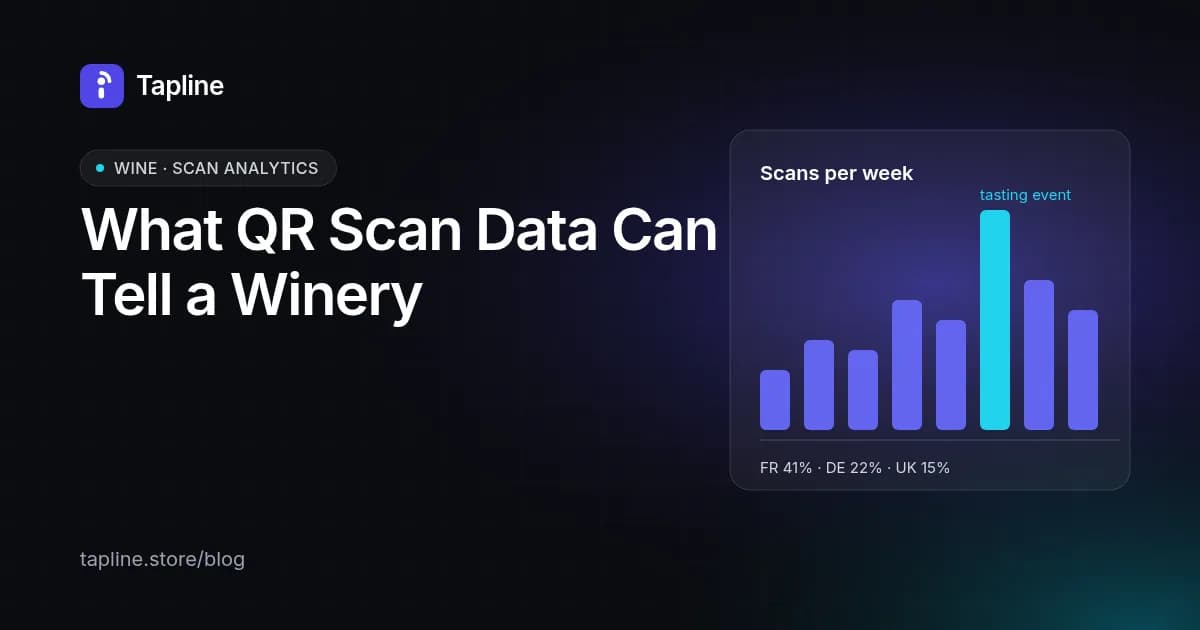
A marketing QR code on a wine bottle does two jobs. It gives the drinker something useful after the scan, and it tells you, in rough numbers, which bottles are being opened. This post explains what that scan data really shows, what it can't show, and how to read it without fooling yourself.
Can I track scans of my wine's e-label QR code?
No. For EU wine, the ingredients and nutrition page must not collect or track user data, and the Commission's Q&A says asking for consent doesn't change that. Keep the e-label code untracked. Scan analytics belong on your second, marketing code only. If you need a refresher on keeping the two apart, see two QR codes on a wine label.
What does QR scan data show a winery?
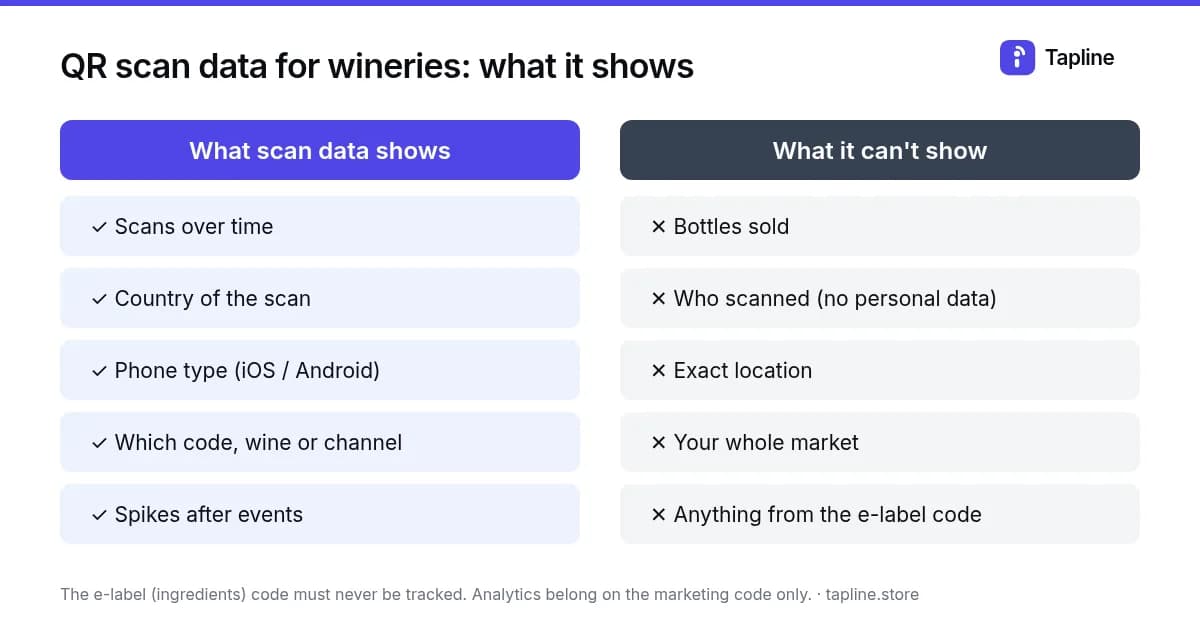
A good scan dashboard answers three questions:
- How many scans, over time. A spike after a tasting event, a trade fair or a new listing tells you that channel is moving bottles into people's hands.
- Which device. The iPhone/Android split helps you test the page on the phones your drinkers actually use.
- Which code. If each wine, vintage or channel (cellar door, restaurant, retail) has its own code, you can compare them side by side.
In Tapline, each code shows its scan count over time and by device type, without storing raw IP addresses or personal data about who scanned. Want to compare export markets? Give each market its own code, and the per-code counts will show you the split.
What can't scan data tell me?
Be careful not to over-read it:
- It isn't sales. A scan means someone was curious enough to open the page. It doesn't say how many bottles were sold, and one bottle can be scanned by several people at the same table.
- It isn't a person. Without signups or logins you don't know who scanned, and you shouldn't try to find out.
- It isn't a map. Scan counts tell you how often a code is used, not where the bottle is. If location matters, use a separate code per market or channel.
- It isn't complete. Most people never scan. Scans are a sample of your most engaged drinkers, not your whole market.
How many scans should a wine bottle get?
There's no reliable public benchmark for wine, and scan rates vary hugely with the call to action, the code's size and where the bottle is drunk. Instead of chasing an industry number, compare your own codes against each other: the same wine with two different calls to action, or the same call to action on two wines.
How do I get more useful data from my codes?
- Give each channel its own code. A separate code for restaurant lists, retail and the cellar door shows you which channel produces curious drinkers.
- Write a clear call to action. "Scan for food pairings" gets more scans than an unlabelled square.
- Change the page, not the code. With a dynamic code you can test a new page (a winemaker video, a pairing guide) and watch whether scans hold up, without reprinting.
- Note the dates of your events. Scan spikes only mean something if you know what happened that week.
Does scan tracking need a cookie banner?
That depends on how the tracking works and on the privacy laws where your drinkers are. Analytics that store no personal data and set no tracking cookies are the simplest to justify, but you should confirm your own setup with your privacy adviser. What's not in doubt: the e-label page itself must not track at all.
What should I do with the numbers?
Use scan data to make three decisions:
- Which wines get a richer page. The wines people scan most deserve better tasting notes, a video or pairing ideas.
- Which markets to look at. If each export market has its own code, steady scans on one of them are a reason to talk to the distributor there.
- Which channels to invest in. If restaurant codes outscan retail, your story is landing at the table.
Where does Tapline fit?
Tapline gives each wine its own marketing page and QR code, with scan counts per code, a reorder button to your own shop on the Growth plan, and pages you can edit after printing. The marketing page is never the legal e-label. Tapline can also host a separate, neutral e-label page that you fill in yourself, and you are responsible for its accuracy.
Related: two QR codes on a wine label.
Related: what happens after the scan.
Related: pricing.