Since December 2023, EU wine needs its ingredients and nutrition information, and most wineries put it behind a QR code. That page has to stay plain. A separate Tapline code next to it is where the bottle can tell its story and sell the next one.
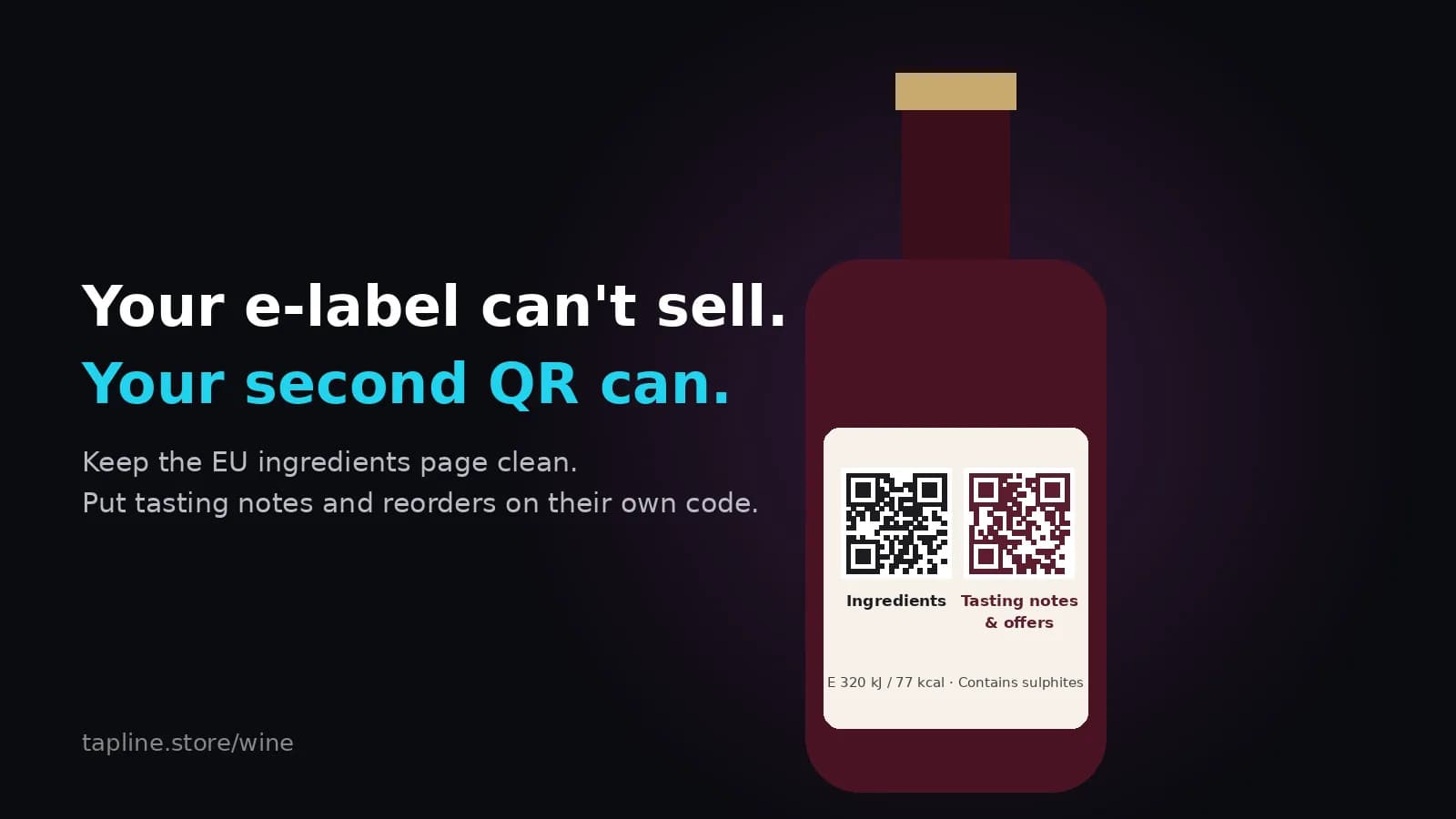
What the clip covers, in case you’d rather read it.
EU wine needs its ingredients and a nutrition table.
Energy and allergens stay printed. The rest can sit behind a code marked “Ingredients”.
No selling, no shop links, no tracking — there are no exceptions.
Add a second, separate QR code. That one is Tapline’s.
Coming soon: City-level breakdown in the dashboard · Shopify and Klaviyo sync.
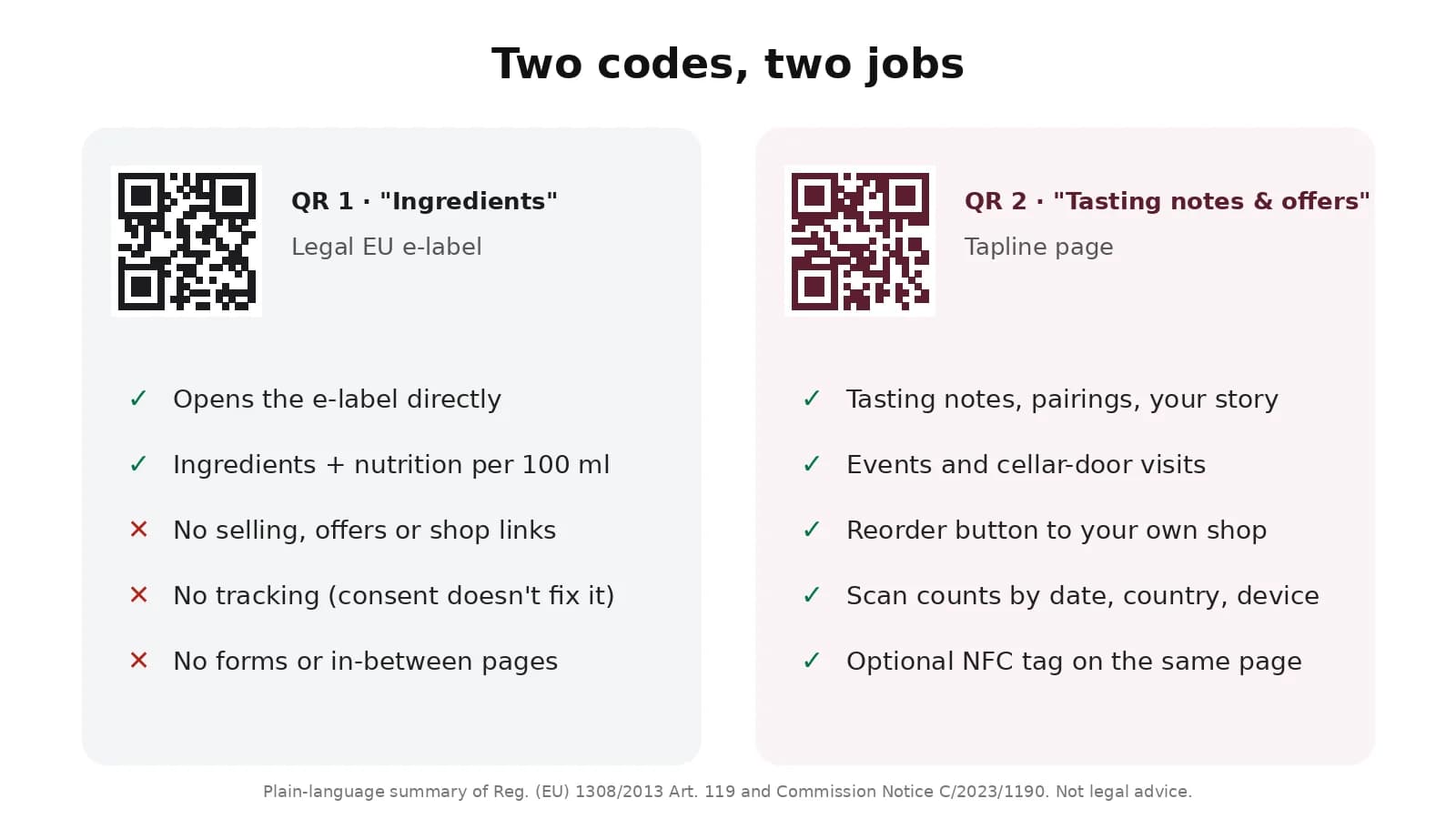
Not exactly. Wine made from 8 December 2023 and sold in the EU must give buyers its ingredients and a full nutrition table. Wineries can print that on the bottle or move it online behind a code. If they move it online, the energy value and allergens such as "Contains sulphites" still go on the bottle, next to a code marked with a word like "Ingredients".
No. The regulation says the ingredients and nutrition information must not be shown with sales or marketing content and that no user data may be collected or tracked. The Commission's Q&A adds that there are no exceptions, so asking for consent doesn't make tracking allowed, and that the code must open the information straight away, with no forms or in-between pages. Links to a shop count as marketing.
The Commission's Q&A says a producer's own website does not seem to comply, because it normally sells and tracks. The e-label needs its own neutral page for each wine.
Yes, as long as it's clearly separate from the e-label code, doesn't mislead and doesn't take space away from the required information. That second code is where tasting notes, offers and reorders belong.
The Tapline marketing page is never the legal e-label. Tapline can also host a separate, neutral e-label page that you fill in yourself: a fixed template for the information the EU asks for, no tracking on the page, and its own code for each wine. Tapline shows exactly what you enter and does not check it, so you are responsible for its accuracy. This is not legal advice. You can also keep your ingredients and nutrition page with an e-label provider or on your own neutral page. Either way, put the Tapline marketing code beside it with a clear call to action such as "Scan for tasting notes & offers".
The code is the easy part. What matters is the page behind it and what you learn from it. Tapline drafts that page for each wine, adds a reorder button to your own shop, offers NFC tags for a tap instead of a scan, and shows how many times each code is scanned. Club and email signups are stored in your portal, and a page can carry several languages on the Scale plan. City-level data in the dashboard is coming soon; we list things as coming soon until they ship.
How many times each code was scanned, over time and by phone type. Tapline never stores a raw IP address and doesn't see your sales, so it can't tell you how many bottles were sold. It only tells you how many were scanned.
The Free plan includes one page and its QR code. The Growth plan is $29/month and adds up to 10 pages, the reorder button, full analytics and NFC tags.
Not legal advice. This is a plain-language summary of the EU wine labelling rules, Art. 119 of Regulation (EU) 1308/2013 and the Commission's Q&A, checked October 2026. Confirm the details for your wines and markets with your own adviser.
More reading: EU e-label rules for wine and spirits · Two QR codes on a wine label · QR code vs NFC tag · Spirits and wine use case · Pricing