Wine
EU Wine E-Label Rules Explained: Ingredients, Nutrition and QR Codes
What the EU e-label rules require for wine since December 2023: what stays on the bottle, what can go behind a QR code, what the e-label page can't do, and where spirits stand.
By Ali Murtaza · · Updated
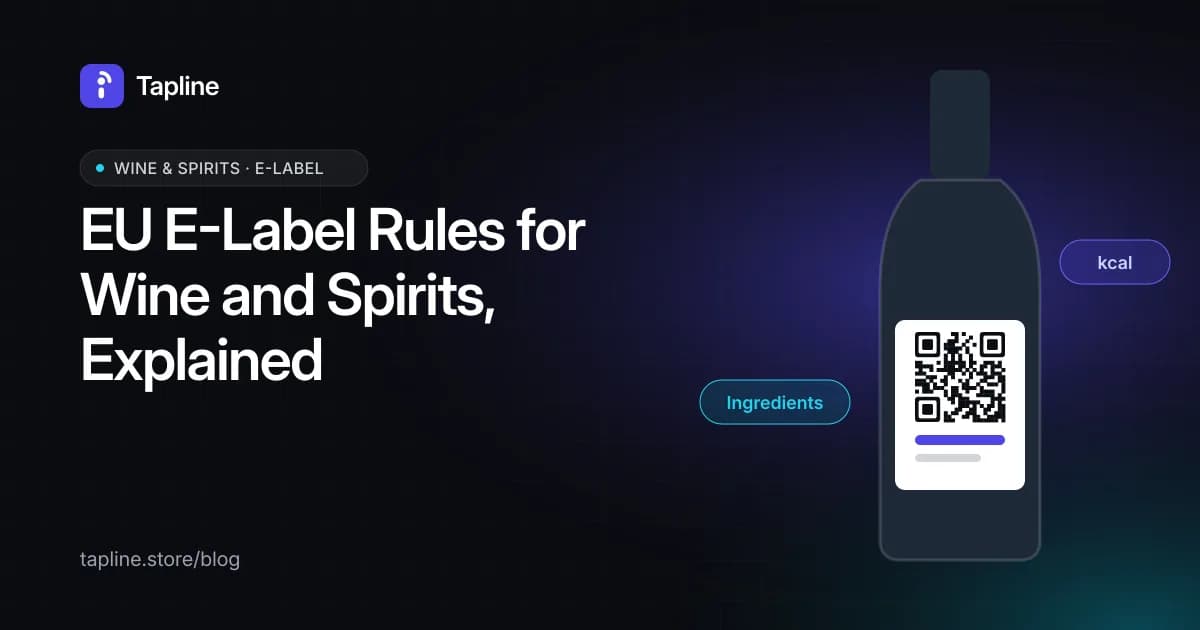
Wine and spirits brands selling into the EU are expected to make ingredient and nutrition information available to the shopper. Printing it all on the label isn't practical for most bottles, so the common approach is a digital label — ingredient and nutrition information reachable by scanning a code on the bottle — often called an e-label.
This article describes the general shape of the requirement, not legal advice — confirm the current specifics for your product and market with your own compliance counsel before relying on it.
Why the e-label can't share your marketing QR
For wine, the EU rules say the ingredient and nutrition page must not be shown with sales or marketing content, must not collect or track user data (asking for consent doesn't change that), and must open straight away with no forms or in-between pages. So a product page with tasting notes, offers or a reorder button can't double as the e-label. The usual setup is two codes: a plain "Ingredients" QR for the legal e-label, and a second, clearly separate code for tasting notes and offers.
What the page typically needs to include
- A list of ingredients
- Energy value and nutrition information per 100ml
- Content that stays accurate if a recipe or ABV changes — easier on a digital page you can edit than on a printed label you'd need to reprint
Which wines do the EU e-label rules apply to?
The rules come from Regulation (EU) 2021/2117, which amended the EU's wine labelling rules. They apply to wine produced from 8 December 2023 and sold in the EU, including imports. Wine made before that date can still be sold with its old labels until stocks run out. Aromatised wine products are covered by a parallel change.
What has to stay printed on the bottle?
Two things can't move online. The energy value (in kJ and kcal, per 100 ml) must be on the label, either on its own or as the "E" symbol with the figure. Allergens, such as "Contains sulphites", must also be printed in words. Everything else in the ingredient list and the full nutrition table can sit behind a code.
What can go behind the QR code?
The full list of ingredients, using the terms set out in Commission Delegated Regulation (EU) 2023/1606, and the full nutrition declaration per 100 ml: energy, fat, saturates, carbohydrate, sugars, protein and salt. Many wines show most values as zero or "negligible amounts", which the rules allow.
How should the e-label QR code be marked?
The code on the bottle must be labelled so buyers know what it leads to. A QR code on its own, or next to a generic "i" symbol, isn't enough: the Commission's guidance asks for a heading beside the code that includes the word "Ingredients", in a language buyers in that market understand. Until a common symbol is agreed, the word is the safe choice.
What is the e-label page not allowed to do?
The page must open the information straight away, with no forms, cookie walls or in-between pages. It must not show sales or marketing content, which includes shop links, and it must not collect or track user data. The Commission's Q&A says there are no exceptions, so consent doesn't make tracking allowed. It also says a producer's own website doesn't seem to comply, because it normally sells and tracks.
Does the e-label need to be in several languages?
The information must be in a language easily understood by buyers in each market where the wine is sold. A digital page makes that easier than a printed label, because one code can open the right language version. Check each market's language requirement before you print.
Can I still have a marketing QR code on the bottle?
Yes, as a second, separate code. It must be clearly distinct from the e-label code and mustn't take space from the mandatory information. That second code is where tasting notes, pairings, events and reorders belong. Our guide to placing two QR codes on a wine label covers sizes, spacing and wording.
Do the rules apply to spirits?
Not in the same way, yet. The wine rules above apply to wine and aromatised wine products. Spirits sold in the EU don't currently have to list ingredients and nutrition, although the drinks industry has a voluntary commitment to share that information, often online. Proposals to extend labelling to all alcoholic drinks are being discussed, so check the latest position before reprinting spirits labels.
Can I track how many people scan the e-label?
No. Tracking isn't allowed on the e-label page in any form. If you want scan numbers, put them on your second, marketing code. What QR scan data can tell a winery explains what those numbers show.
How to fit both codes on one back label is in Two QR codes on a wine label.
What scans on the marketing code can tell you is in What QR scan data can (and can't) tell a winery.
The Tapline marketing page is that second code, never the legal e-label. Tapline can also host a separate, neutral e-label page that you fill in yourself, and you are responsible for its accuracy. What happens after the scan, and a plain-language Q&A on the wine rules, is on our wine page.
Choosing between a printed code and a tap for the bottle itself is covered in QR code vs NFC tag for product packaging.